Lesson Plan: How Dialogue Reveals a Character
Lesson 1 of 2 — Dialogue Reveals Character (The Giver)
Grade Level: 8th
Duration: 45 minutes
Standard Alignment: CCSS.ELA-LITERACY.RL.8.3 — Analyze how particular lines of dialogue or incidents in a story or drama propel the action, reveal aspects of a character, or provoke a decision.
Prerequisite: Students should have read through Chapter 16 of The Giver as part of an ongoing class novel study.
Objective
Students will be able to explain what a specific line of dialogue from Chapter 16 of The Giver reveals about a character's most important trait, citing not only the exact words that support their interpretation but also what has happened in the plot to initiate the conversation.
Materials
Student copies of The Giver (Chapter 16)
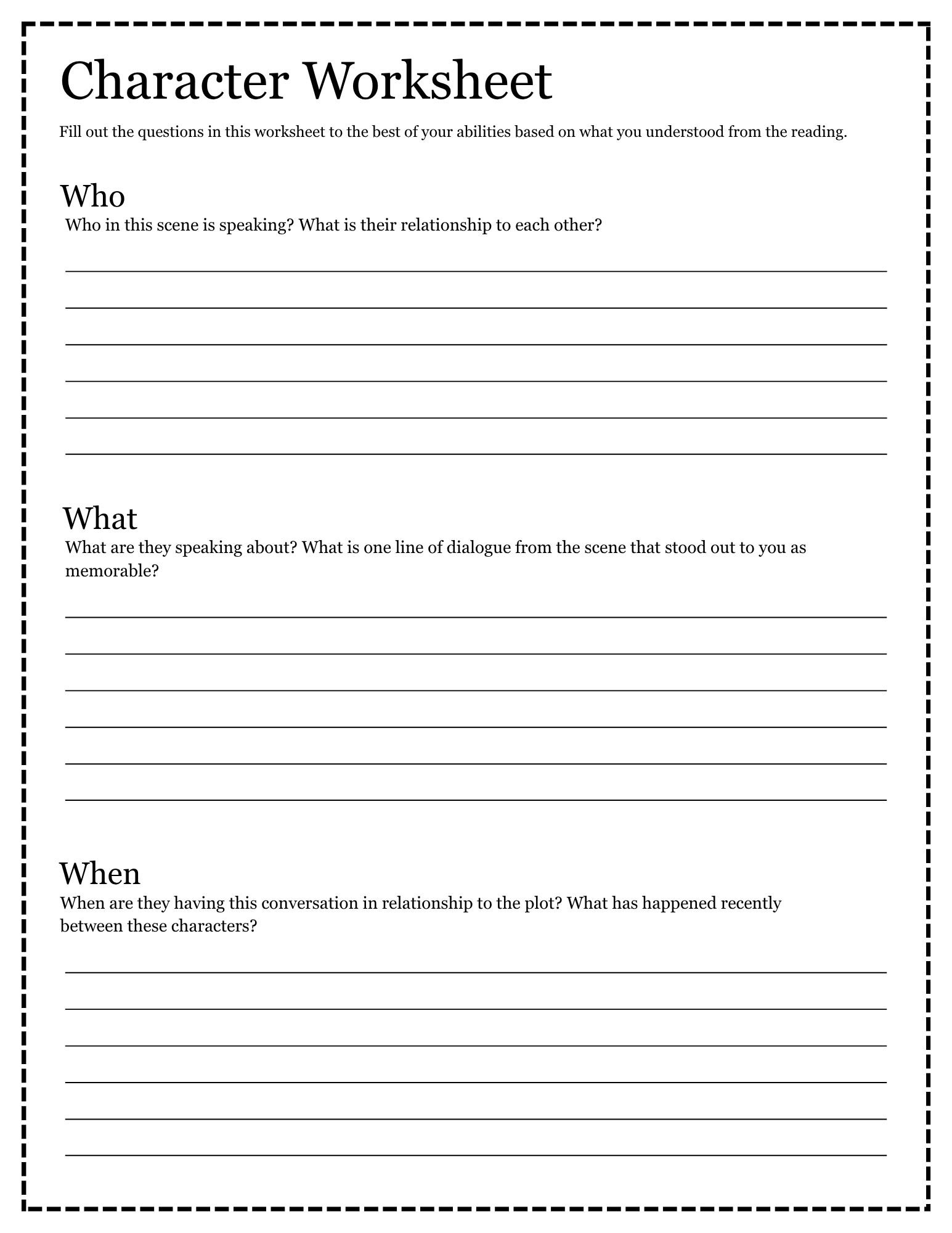
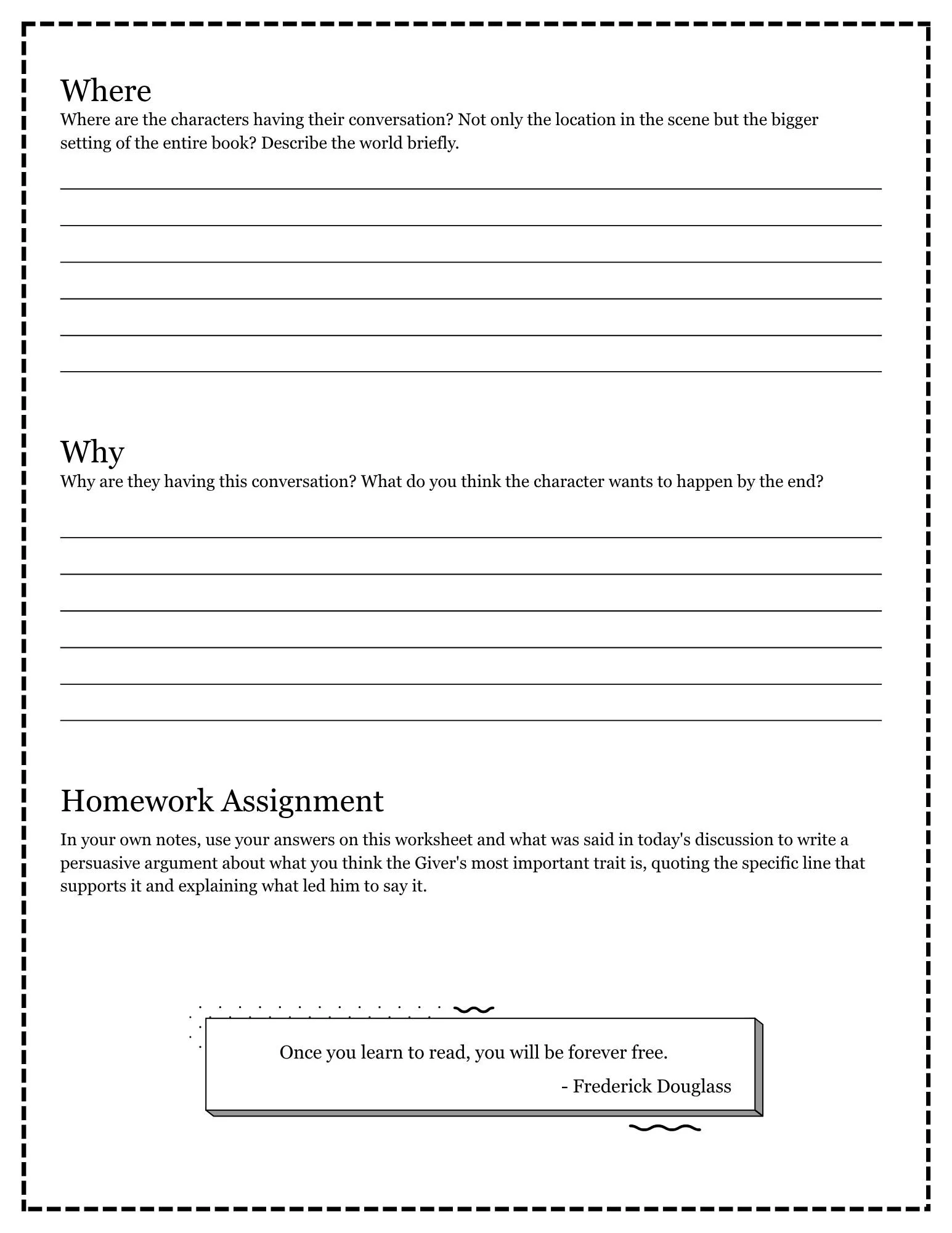
“Who/What/When/Where/Why” worksheet on The Giver's Christmas-memory scene
Paragraph prompt: using worksheet answers, argue what the Giver's most important trait is, quoting the specific line that supports it and explaining what led him to say it
Why This Scene
This scene is a pivotal moment of change for all characters in the chapter, especially the Giver, who has previously approached Jonas with practicality and rigor rather than emotion. This scene also matters for the extra-credit extension and for the lesson sequence beyond this one: it's the primary emotional turning point for Jonas, who begins to question his unfailing faith in the system.
Lesson Sequence
1. Hook / Framing ( 3 min) Briefly frame the task: today we're looking closely at one conversation between Jonas and the Giver to figure out what it reveals about the Giver's character. There's no single right answer, only a claim you can defend with evidence.
2. Direct Instruction: Read-Aloud ( 10 min) Read the Chapter 16 passage aloud as a class, from the beginning to end of the conversation between Jonas and the Giver at the scene break.
3. Guided Practice: Worksheet ( 10 min) Students complete the “Who/What/When/Where/Why” worksheet individually.
4. Guided Practice: Small Groups ( 10 min) In small groups, students discuss their worksheet answers and must reach consensus on one trait they believe the Giver's dialogue most reveals.
5. Closure: Share-Out & Homework ( 12 min) Each group gives a one-sentence argument for their chosen trait (7 min). Close by assigning the homework paragraph: using worksheet answers and today's discussion, argue what the Giver's most important trait is, quoting the specific line that supports it and explaining what led him to say it (5 min to explain the assignment).
Differentiation
Support: Students who need additional scaffolding may choose from a provided list of traits/arguments and defend one, rather than generating their own claim independently.
Extension: Students may informally apply the same thinking to Jonas as a point of comparison. Optional extra credit: select a line of Jonas's dialogue from the same scene and write a brief defense of what it reveals about his character.
Assessment
Homework paragraph is scored out of 3, one point for each:
Includes a specific line of dialogue as evidence
Names a clear character trait
References plot events and/or worksheet answers to explain what led to the conversation
Note: There is no single "correct" trait. Full credit depends on the strength and evidence behind the argument, not which trait the student chooses.
Teacher Notes
This lesson exists to strengthen a student's ability to construct and defend an interpretation of an author's intended message in a literary work and connect it to their own life experience so that it directly enriches their education and personal development.
This is Lesson 1 of a two-part sequence. Here, students practice grounding a claim about character in specific textual evidence. Lesson 2 builds on this skill to ask a bigger question: what is the author using this character to say?
Companion Worksheet